

INTERVIEW: High school students see the numbers and take action
Spring break means learning, leadership, data, and democracy

Over Spring Break in NYC, The Civics Center piloted a new program to help students appreciate how policies and practices impact their access to the ballot box. Our Democracy Fellow, Bre Glover, designed the program with support from other TCC staff.
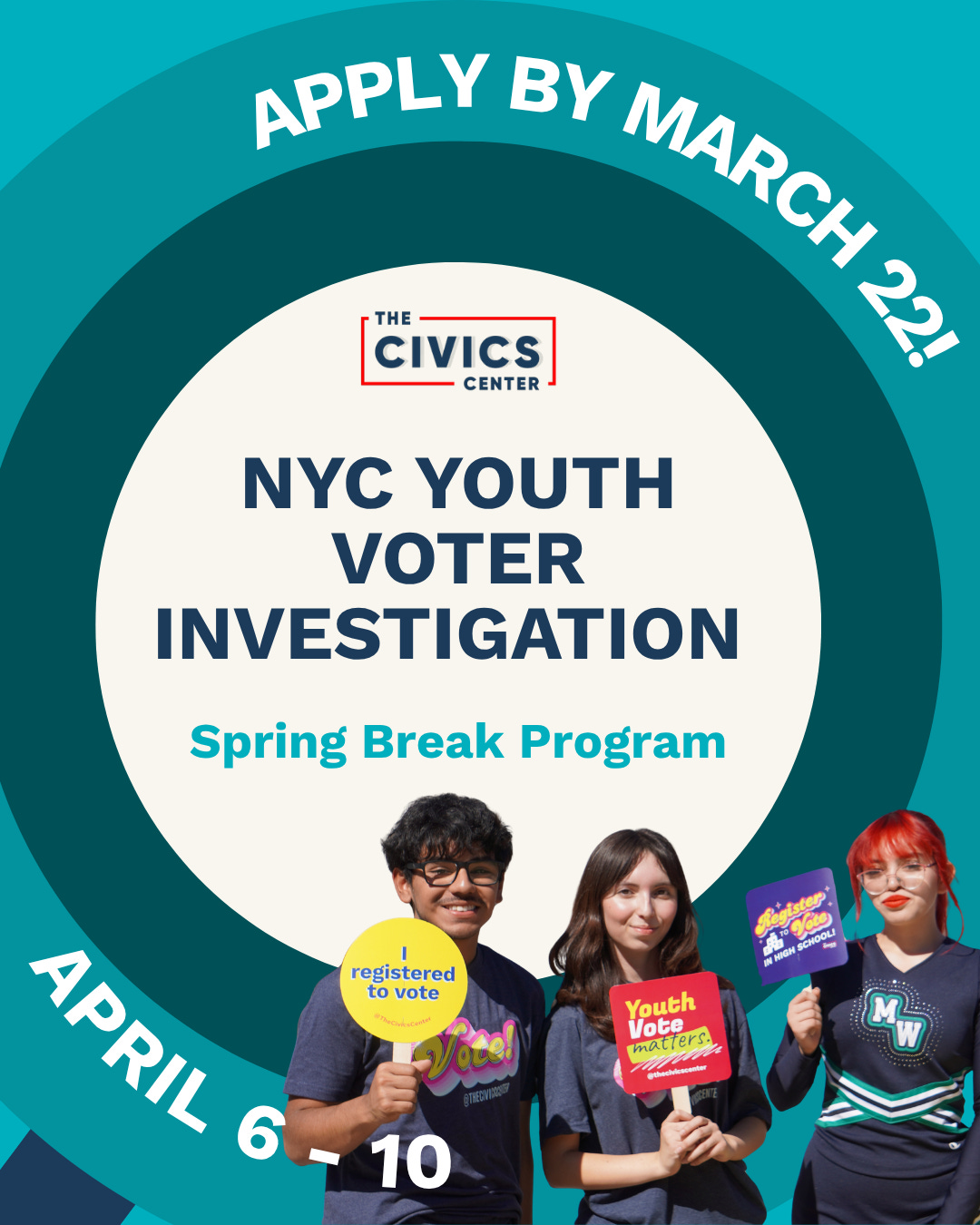
We felt so inspired hearing about the results, we wanted to share it with you through this Q&A:
What is the idea of the Youth Voter Investigation?
Bre: Inspired by our data portal, we set out to build a program rooted in data & inquiry. In this program, students would build a hypothesis around the question how do we improve youth voter registration rates?
We wanted this program to be rooted in discussion — the driving force behind the knowledge would be the contributions of each individual student and learning from each other. The program would also be hyper local: students would dive into what was affecting registration rates in their community, and what organizations are doing amazing work in their borough and neighborhood.
What goals did you have for the program?
Bre: We wanted to explore how students could use knowledge of systemic and social factors that impact voter registration and apply that to run a more tailored voter registration drive in their school. We also wanted students to have the opportunity to develop solutions to low youth registration rates outside of running voter registration drives.
How did you recruit for it?
Bre: We recruited through social media, email campaigns, & contacting educators and students who previously ran a drive with us. A couple of schools shared our program with their entire school community, and that got us a lot of applications (shoutout those incredible educators for believing in the program and spreading the word!). I would say half of the students found us through schools/educators sharing the program and the other half found us through social media.
What were some of the things that stood out for the teens?
Bre: So many of the teens that were a part of the program were unaware of pre-registration. To quote one YVI member, “I’m going to be an advocate for registering as early as possible as it is so important to the future and youth voting.” Students who were under 18 told me they were planning on pre-registering and that they were going to spread the word to all of their friends!
Another thing that really stood out for teens was the history aspect. We covered the voting rights amendments to the Constitution, the March Against Fear, the history of voter registration drives during the Civil Rights movement in the South, Gerrymandering, and the Voting Rights Act. In their exit surveys, students repeatedly told us this was one of their favorite parts of the program — they got to explore famous historical stories in a new way that was directly relevant and tangible to their own interests.
Were there any special challenges or especially gratifying successes?
Bre: Although we spent so much time building out the program ahead of time, the nature of the program and its reliance on discussion was that it was living, breathing, and ever-changing. That meant we were constantly editing, changing, and building upon the program
What type of events are the students planning? How are you supporting them?
Bre: Most of the students are planning tailored voter registration drives. But a couple of them are doing alternative voting activities — like a poster on voter ID rules.
Students had a lot of time to work on their drives or projects during the program, but I’ve been in touch with them since helping them work out any issues they’ve encountered along the way. For example, a student let me know they were having trouble recruiting classmates to run a drive with them and they were nervous to run one alone. We worked together to come up with strategies to find students to join their team, strategized how to kick-start planning a larger drive in the fall, and brainstormed other projects they would be more comfortable doing on their own.
How did TCC staff support you in putting this together and what TCC resources did you draw upon?
Bre: The programs team was instrumental in the success of this program, specifically our Manager of Educator Development, Charlotte Nichols.
Charlotte used to be a teacher, and taught me how to structure lesson plans, different strategies to use for participation, and supported me throughout the program. I couldn’t have done it without her valuable knowledge and excellent coaching!
How do you feel about doing it again, and what advice do you have for partner orgs wanting to work with us to bring YVI to their community?
Bre: I’m so excited to run this program again! The students responded very positively to the curriculum and one even reached out to me a few days after it concluded and said they missed it (best compliment ever!)
For partners interested in running a YVI program of their own, I would recommend thinking about what makes your city, and communities within the city, special. The best part of this program is that it focuses on your local community.
You are also our resident yarn-craft expert. Can you show us a picture of a recent project?
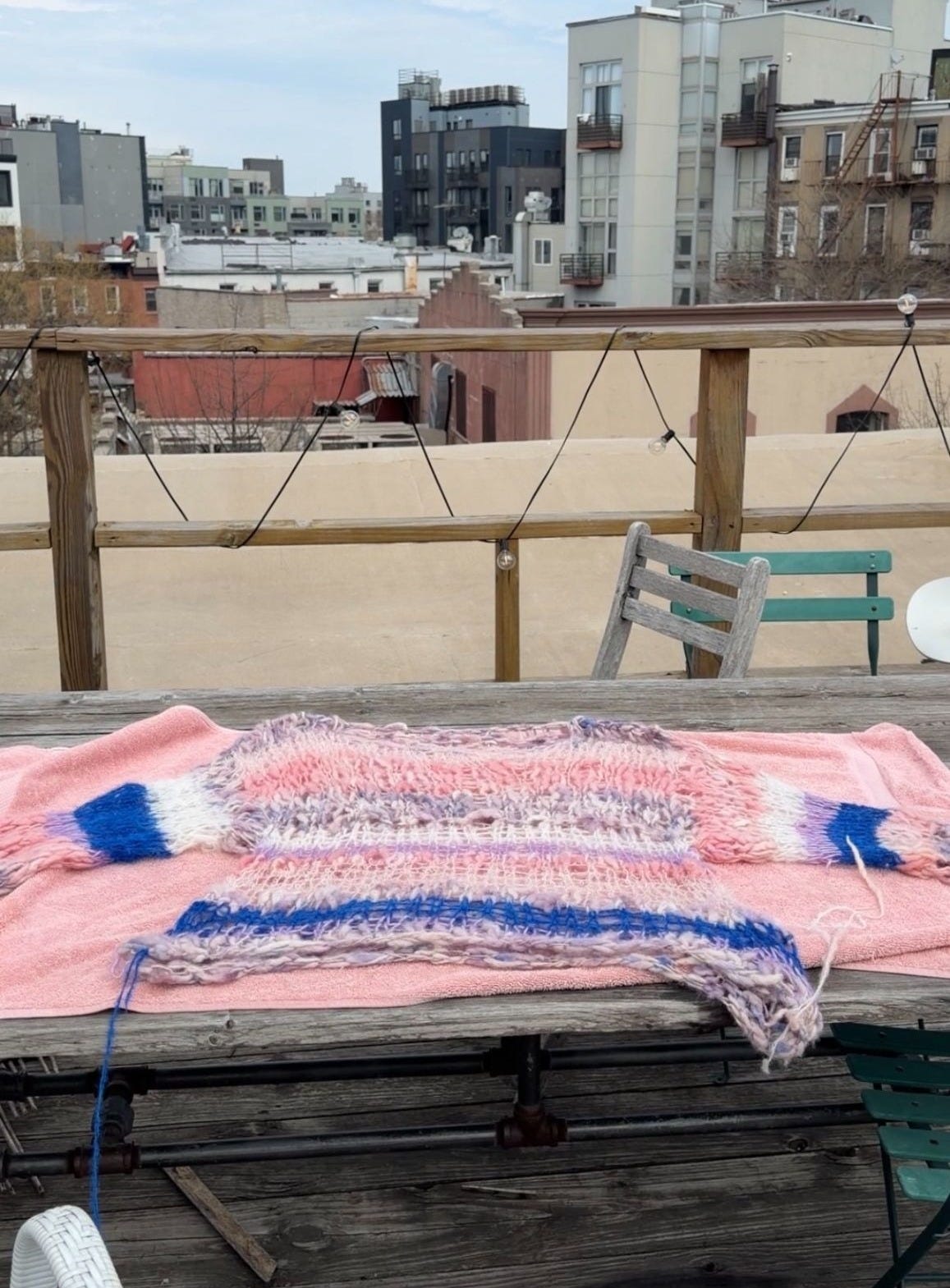
Bre: My most recent project is a loose knit scrappy wool sweater! Here is a photo of it blocking on my roof.
Thank you for all you do!